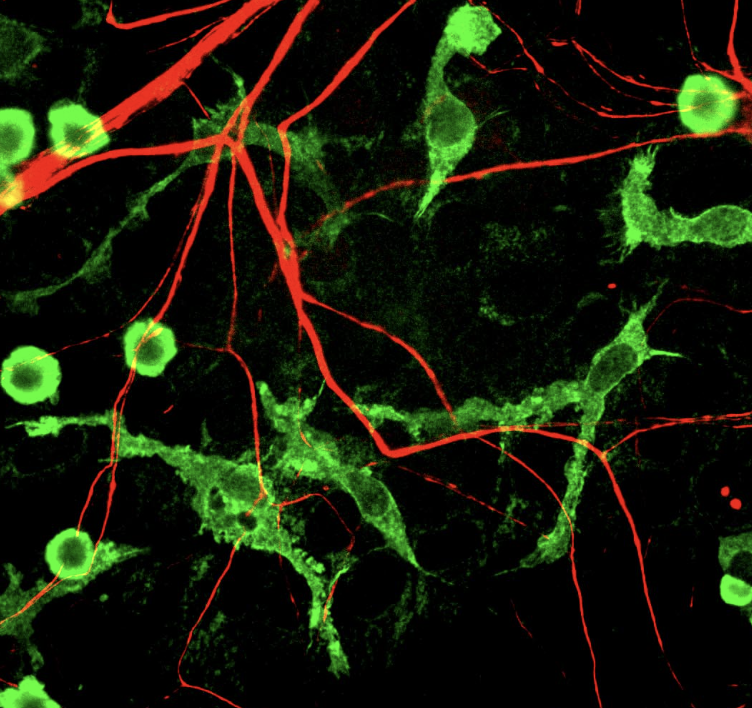
La microglie, cellule caméléon du cerveau, entre soin et inflammation
Elle protège le cerveau… mais peut aussi l’abîmer. Découvrez pourquoi la microglie fascine autant les chercheurs.
Qu’est-ce que la microglie ?
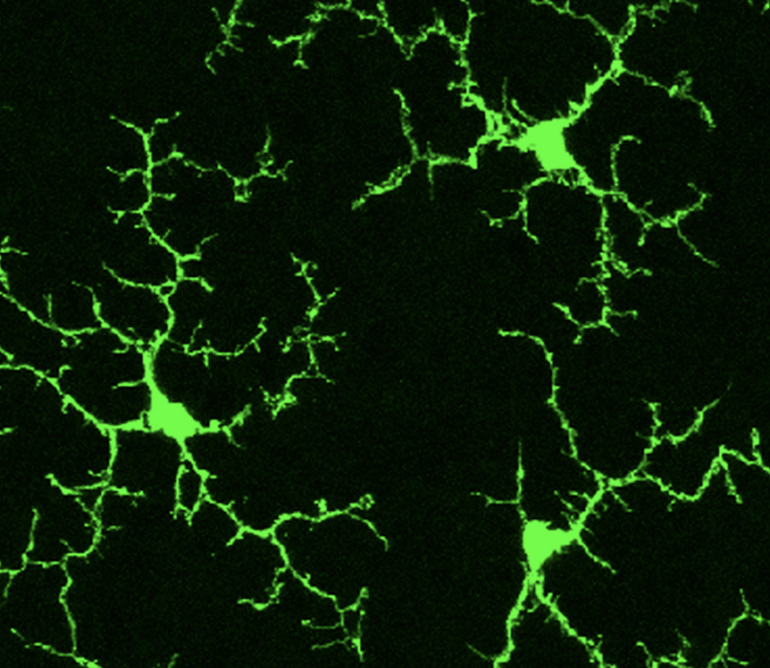
La microglie est une cellule immunitaire résidente du cerveau, représentant environ 5 à 10 % des cellules cérébrales. Issue du sac vitellin pendant le développement embryonnaire, elle patrouille sans relâche dans le tissu nerveux à la recherche d’anomalies.
Sa mission : repérer le moindre signe de danger, éliminer les débris cellulaires, neutraliser les microbes et alerter les autres cellules immunitaires en cas d’agression.
Véritable sentinelle du cerveau, elle joue un rôle essentiel dans sa protection et son bon fonctionnement.
Fonctions clés dans les maladies neurodégénératives
En temps normal, la microglie contribue activement à l’équilibre du cerveau. Elle élimine les cellules mortes, sculpte les connexions neuronales inutiles pendant le développement, et soutient les neurones en sécrétant des facteurs de croissance.
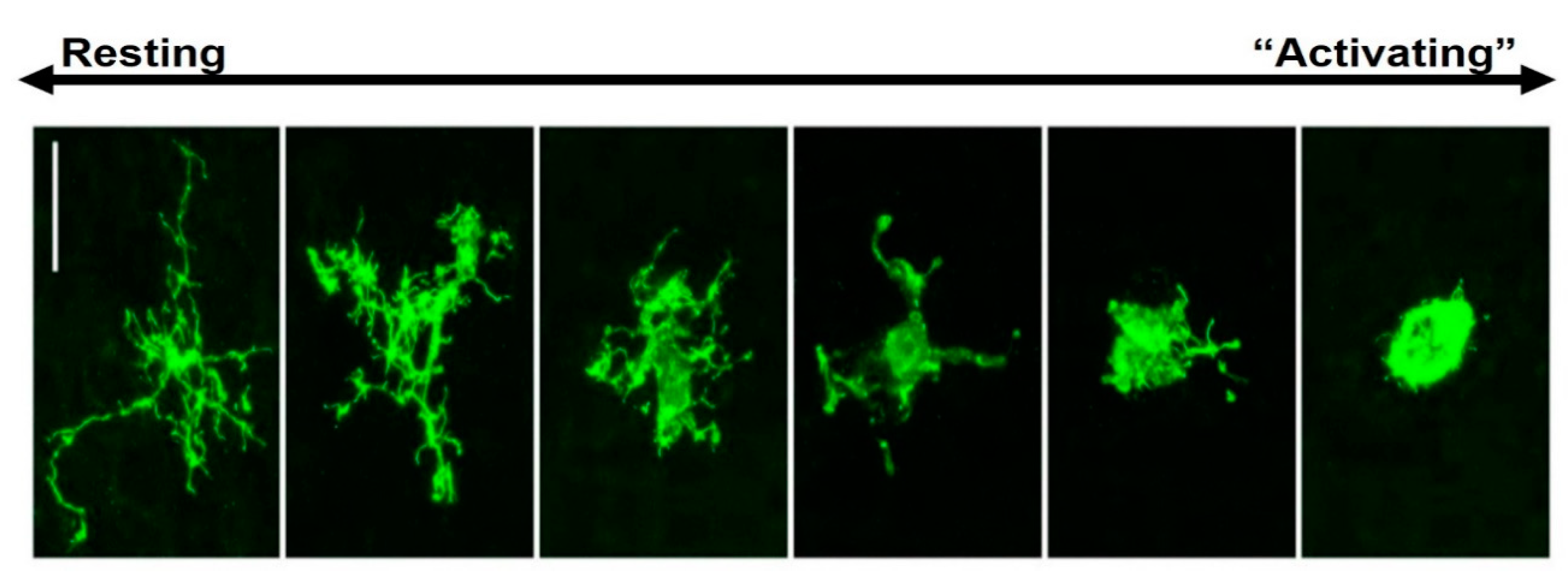
Mais dès qu’un déséquilibre est détecté, infection, lésion, ou accumulation anormale de protéines, elle s’active. Cette activation s’accompagne d’un changement de forme, de comportement et de fonction : la microglie migre vers les zones lésées, libère des molécules pro-inflammatoires, et renforce la réponse immunitaire locale.
Ce mécanisme est essentiel à court terme, mais devient problématique s’il s’installe dans la durée.
Dans des maladies comme Alzheimer, Parkinson ou la sclérose en plaques, la microglie reste anormalement active pendant des mois, voire des années. Elle finit alors par entretenir une inflammation chronique, perturber le fonctionnement des neurones, et parfois aggraver les lésions au lieu de les réparer.
Comprendre comment réguler cette activation microgliale est aujourd’hui un enjeu central pour développer de nouvelles thérapies contre les maladies neurodégénératives.
Que cherchent les chercheurs aujourd’hui ?
Pour mieux comprendre les maladies du cerveau, les scientifiques se penchent de plus en plus sur la microglie. Cette cellule immunitaire, longtemps considérée comme secondaire, s’avère en réalité essentielle à l’équilibre du système nerveux, mais aussi à son dérèglement.
Comment la microglie change-t-elle de rôle ?
Dans un cerveau sain, la microglie protège et soutient les neurones. Mais sous l’effet du stress, du vieillissement ou de certaines maladies, elle peut se transformer et adopter un comportement toxique. Les chercheurs cherchent à comprendre les signaux qui déclenchent ce basculement, et comment empêcher qu’il ne devienne chronique.
🩺 Enjeu médical : limiter l’inflammation cérébrale et ralentir la progression de maladies comme Alzheimer ou Parkinson.
Peut-on reprogrammer la microglie pour qu’elle répare le cerveau ?
Certaines études montrent que la microglie pourrait aussi aider à reconstruire des circuits neuronaux endommagés. Les scientifiques explorent comment réactiver ce potentiel réparateur, sans provoquer d’effets secondaires.
🩺 Enjeu médical : stimuler la régénération dans la sclérose en plaques ou après un traumatisme cérébral.
Les dernières découvertes
Des chercheurs de l’Université de Californie à Irvine ont créé des microglies humaines modifiées génétiquement (CRISPR) pour produire l’enzyme neprilysine — un destructeur de plaques amyloïdes — uniquement là où elles s’accumulent.
- Réduisent fortement les dépôts amyloïdes
- Protègent neurones et synapses
- Diminuent l’inflammation
- Réduisent les marqueurs de lésion neuronale
Espoir concret : une thérapie « vivante », ciblée et adaptable, laissant espérer une nouvelle classe de traitements microgliaux sur mesure.
Nasal Foralumab : apaisement d’une microglie hyperactive
La biotech Tiziana Life Sciences a testé l’administration intranasale d’un anticorps anti-CD3 (Foralumab) chez des patients atteints d’Alzheimer modéré.
Les PET-scans microgliaux (TSPO) montrent une baisse significative de l’activation microgliale après trois mois de traitement.
Espoir concret : réduire l’inflammation cérébrale via une voie non invasive et synergique, en complément des traitements actuels.